Almaty clicks into focus in just three hours. This short, small-group walk lines up the big landmarks of downtown—Central Mosque, Republic Square, Ascension Cathedral—so you can get oriented fast. I also like the mobile ticket setup, because it keeps the meeting simple and low-stress. One caution: the route is tight, so you will move on even if you want more time at a stop.
I joined the walk with Gulmira guiding, and I noticed how she managed the city’s volume. When you’re near major roads, cars and noise make long explanations hard, so she focuses the talk when the group is stopped. That pacing makes sense, but it also means you’ll get highlights more than deep, slow storytelling.
The payoff is that the tour is not just a street stroll. Admission tickets are included for each listed site, which saves you the hassle of figuring out what to enter and when. Still, if you want a long, museum-grade history lesson, this one may feel a little too quick.
In This Review
- Key highlights at a glance
- Where this Almaty walk starts (and ends)
- Panfilov’s 28 Guardsmen Park: monuments and war memory
- Central Mosque of Almaty: architecture you can actually see up close
- Abay-linked Opera and Ballet Theatre: a classic façade moment
- Zeleny Bazaar: where shopping and tasting are part of the experience
- Arbat Shopping Street: fountains, street music, and quick art
- Republic Square: independence monument as a city centerpiece
- Ascension Cathedral: wooden architecture that survived a quake
- Arasan Wellness & SPA: a calm landing after a busy walk
- Price and value: what $67 buys you here
- Who should book, and who should skip
- Practical tips to make the walk easier
- Should you book the Almaty City Walking Tour?
- FAQ
- How long is the Almaty City Walking Tour?
- How much does the tour cost?
- Is this a small-group tour?
- What time does the tour start, and where does it meet?
- Where does the tour end?
- Do I get a mobile ticket?
- What is included in the price?
- What is not included?
- What happens if the weather is bad?
- What is the cancellation policy?
Key highlights at a glance
- Mobile ticket on your phone for an easy start
- Up to 15 people for a more personal downtown loop
- Included admissions across monuments, religious sites, and markets
- Zeleny Bazaar time for souvenir shopping and tasting culture
- Arbat Street street life with music, sculptures, and quick artist portraits
- Arasan Wellness & SPA stop as a memorable end point after sightseeing
Where this Almaty walk starts (and ends)
This tour is built around a downtown loop, starting at the Central State Museum of the Republic of Kazakhstan (Samal-1, 44, Almaty 050059). It begins at 11:30am, and the walk finishes at Arasan Wellness & SPA (Tolebaeva, 78, corner with Aiteke Bi), so you end with a practical destination instead of “see you later in the city.”
The group is capped at 15 people, which matters more than it sounds. On a walking tour, smaller groups keep the pace human. You spend less time waiting for a big clump to cross streets or catch up at photo stops, and you get better odds of asking your guide a question without shouting.
Also, you’ll be on foot for about 3 hours. That’s long enough to cover meaningful ground, but short enough that you can still add something else later in the day.
You can also read our reviews of more walking tours in Almaty


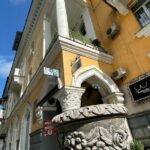
Panfilov’s 28 Guardsmen Park: monuments and war memory
The walk kicks off at a park named after Panfilov’s 28 Guardsmen. This is not a “pretty park” stop so much as a place to understand what Almaty remembers and honors from the Great Patriotic War. The setting gives you a chance to see multiple monuments devoted to that era, and you’ll likely notice how memorial design is used to communicate both grief and pride.
You get about 30 minutes here, which is enough for a first-time look—walking, orienting, and picking up the key context your guide provides. If you’re the type who likes to read every plaque, you may feel the time limit. But for most people, this is the right length to connect the symbolism without burning the whole morning.
Practical tip: wear shoes with grip. Park paths and pedestrian areas can be uneven, and you’ll be moving again soon.
Central Mosque of Almaty: architecture you can actually see up close
Next comes the Central Mosque of Almaty. Even with a shorter stop (about 20 minutes), it’s one of the spots where a guide helps. You’re not just looking at a building—you’re learning how the landmark fits into the city’s identity.
What I’d pay attention to: how the mosque’s presence shifts the feeling of the street around it. In many cities, religious landmarks feel like separate worlds. Here, it’s more like a focal point, and the tour route makes it easy to connect that to the rest of downtown.
This stop also includes an admission ticket, which usually means you can access the areas the guide expects you to see. If you’re visiting with a camera, keep it ready, but also be respectful with how you frame people and worship space.
Abay-linked Opera and Ballet Theatre: a classic façade moment
Then you’ll head to the Kazakh State Academic Theatre of Opera and Ballet named after Abay. The building is described as classical in style, and that’s exactly what you’ll notice from outside—proportions, symmetry, and a “downtown landmark” feel that signals cultural importance.
You get around 20 minutes here. This is not an inside-only deep dive. Instead, it’s a chance to clock the theatre as part of the city’s modern civic life and then move on to the places where daily commerce and social life take over.
If you’re planning to see a performance later, a stop like this helps you recognize the theatre area on the street—so you don’t feel like you’re arriving in the dark.
Zeleny Bazaar: where shopping and tasting are part of the experience
One of the best segments of the walk is the time at Zeleny Bazaar, also known as the old Green Bazaar and described as the main market and a city attraction. You get about 30 minutes, and that’s a useful window: long enough to browse, quick enough to keep the full loop on schedule.
This is the stop where the tour shifts from monuments to everyday life. The market experience is about more than buying souvenirs. It’s about how the bazaar works socially—sellers encourage people to taste items before choosing, and that culture is part of why markets like this feel alive.
What you can do practically in this time:
- Look for small gifts that pack well.
- Ask what something is, how it’s used, or whether it’s common as a local snack.
- Spend a few minutes tasting if that’s something you’re comfortable with.
Admission is included for this stop too, which makes the market time feel official instead of like a quick drop-and-run. If you have dietary limits, treat tasting as optional. If you don’t see an easy tasting option, you can still browse and buy without forcing it.
You can also read our reviews of more city tours in Almaty



Arbat Shopping Street: fountains, street music, and quick art
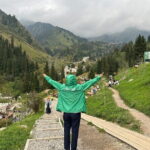
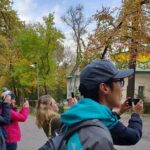
After the bazaar, you’ll walk along Arbat Shopping Street, a lively pedestrian-friendly section of Zhibek Zholy Street between major avenues. The tour frames this area as the most popular place for foot walking, and you’ll see why: cafes, shopping arcades, fountains, sculpture-style displays, and live street performances.
You get about 20 minutes here, which works because Arbat Street is more about atmosphere than a single sight. This is where you get people-watching. It’s also where local artists may offer quick portrait sketching, and street musicians can turn a normal walk into something more memorable.
Practical tip: keep moving with the group, but don’t be afraid to pause for a photo. Just don’t freeze in the middle of the walkway. Street life here moves fast, and you’ll want to keep the day from turning into a slow traffic jam.
Republic Square: independence monument as a city centerpiece
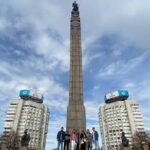
At Republic Square, the focus is the Independence monument, described as a major work of art combining architecture, sculpture, and inscriptions tied to prominent figures of science, culture, and the state. This stop is brief (about 10 minutes), but it’s a strong anchor in the route because it gives you a clear civic storyline: this is what modern Kazakhstan wants to communicate to the world.
Even in a short time, you can still do something useful:
- Notice how the monument relates to open space around it.
- Take a step back for context before you zoom in for details.
- Let the guide’s explanation connect the monument to the surrounding layout.
If you’re hoping for a long sit-down photo session, this might not be the moment. But it’s a good “check the scale” stop that helps you understand Almaty’s public spaces.
Ascension Cathedral: wooden architecture that survived a quake
The next stop is Ascension Cathedral, highlighted as a unique Orthodox monument of early twentieth-century wooden architecture. The tour also notes a serious detail: the building survived a 9.0 magnitude earthquake.
That earthquake note changes how you see the structure. A wooden church can feel delicate at a distance; with that context, it becomes more about resilience and engineering choices that kept it standing. You get about 10 minutes, so think of it as a focused exterior-and-immediate-area stop.
Practical tip: bring a moment of quiet into the stop. Even if it’s short, it’s a religious site. Quick respect goes a long way, and it usually makes your guide more comfortable sharing extra context.
Arasan Wellness & SPA: a calm landing after a busy walk
The walk ends at Arasan Wellness & SPA. It’s described as a popular bathing complex using national traditions alongside modern design. The tour mentions both Russian and Finnish bath types, plus combined baths, an oriental bath, swimming pools, shower rooms, and a children’s area. There’s also a cafe and public service office.
You only get around 10 minutes on the tour. So don’t expect this to become the full spa experience unless you choose to extend your time after the tour. Think of it as a way to cap the day with something distinctly local and practical. After walking the sights, stepping into a wellness setting (even briefly) can feel like a win.
If you’re sensitive to heat or want a relaxing plan, consider whether you’ll actually use facilities later the same day. This final stop is an introduction, not necessarily your full session.
Price and value: what $67 buys you here
At $67 per person for about 3 hours, this tour earns its value by bundling three things that are hard to coordinate on your own: a guided route, a small-group pace, and included admission tickets for the listed sights.
Here’s how that translates for you:
- You pay for a guide who strings the stops together into a coherent city picture.
- You don’t waste time hunting for entry rules or ticket counters.
- The small group helps keep walking smooth and reduces the “everyone gets lost” problem.
Does that mean you’ll get a slow, museum-level experience? No. One critique is that the tour can feel a bit superficial if you’re expecting deeper detail or more time per site. In the same spirit, if your priority is just getting oriented with key landmarks, the price feels fair for what you get.
Who should book, and who should skip
This walking tour is a good fit if you’re:
- In Almaty for a short stay and want a fast downtown overview.
- Interested in seeing major landmarks without planning each entry.
- Comfortable walking and crossing busy streets.
It may feel less satisfying if you’re the type who wants long explanations, deep history at each stop, or extra time at one place. The route is meant to cover a lot, and you can feel that in the schedule.
Also, Almaty can feel surprisingly modern during a downtown walk. If you’re craving older Silk Road evidence, you may prefer to pair this with an outing beyond the city center.
Practical tips to make the walk easier
I’d plan around the city’s noise. Near streets like the ones around Republic Square and Arbat, cars can be loud. That means your guide may talk best when you’re stopped at a site, and you’ll hear less while walking.
Crossing streets is another reality check. The guide will pause and manage the group, but you should still be alert—traffic moves fast and the city intersections are not designed for slow tourism.
Finally, keep your time flexible with the idea that the day is controlled by stops. If you’re planning a bank errand, a quick payment, or anything that needs extra waiting, it can disrupt the flow and make the tour feel short on information.
Should you book the Almaty City Walking Tour?
Book it if you want a tight, organized downtown loop that makes Almaty feel navigable fast, with a guide who can connect monuments, religious architecture, and market life into one morning plan. It’s especially worth it if you like getting bearings early and then doing bigger things later.
Skip it if you already know the downtown sights and you want deeper detail, longer time inside buildings, or a slower pace. In that case, you may get more satisfaction by choosing a longer, themed tour—or by adding a countryside day after you learn the city basics.
In the end, this is a solid orientation walk: quick context, clear landmarks, and a bazaar stop where you can actually shop and taste along the way.
FAQ
How long is the Almaty City Walking Tour?
It runs for about 3 hours.
How much does the tour cost?
The price is $67.00 per person.
Is this a small-group tour?
Yes. The tour has a maximum of 15 travelers.
What time does the tour start, and where does it meet?
It starts at 11:30am. The meeting point is the Central State Museum of the Republic of Kazakhstan, Samal-1, 44, Almaty 050059.
Where does the tour end?
It ends at Arasan Wellness & SPA, Tolebaeva, 78 (corner with Aiteke Bi), Almaty 050000.
Do I get a mobile ticket?
Yes. Tickets are sent to your mobile phone for convenience.
What is included in the price?
The tour includes a walking tour with a guide, and admission tickets are listed as included for each of the stops.
What is not included?
Private transportation is not included.
What happens if the weather is bad?
This experience requires good weather. If it’s canceled due to poor weather, you’ll be offered a different date or a full refund.
What is the cancellation policy?
You can cancel for free up to 24 hours in advance for a full refund.