REVIEW · ALMATY
Guided Walking City Tour in Almaty
Book on Viator →Operated by TJ Travel · Bookable on Viator
A good city tour in Almaty turns buildings into stories. This one strings together Silk Way roots, Soviet-era oddball architecture, and even survival tales from the region’s big nature shocks. You get a professional guide with a sense of humor, and the walk is paced for seeing the city in layers of time.
I particularly like how the tour starts at Zhibek Zholy, where the metro stations have their own themed design, and the guide’s talk links it back to very ancient trade routes. I also like the mix of eras: you’ll look at “Stalin-era” details and then jump to the modern Kazakh state feel without it turning into a museum lecture.
One drawback to consider: if you expect a wide mix of markets, food stops, or deep history beyond what you can see on the street, this tour can feel architecture-forward.
In This Review
- Key highlights at a glance
- Walking Almaty by eras, not just streets
- Entering Almaty at Zhibek Zholy Metro Station
- Panfilov Street: Soviet architecture with street-level charm
- Kunaev Street and the “Gymnasium block” feel
- Park of 28 Panfilovcev: earthquake memory and WWII monuments
- Green Bazar or Arasan Bath House: choose your next flavor of Almaty
- Price and what you actually get for $60
- How the “architecture-focused” style will feel in real life
- Who should book this Almaty walking tour
- Final advice: should you book?
- FAQ
- How long is the Guided Walking City Tour in Almaty?
- Where does the tour start and end?
- What is included in the price?
- Is pickup available?
- Is bottled water provided?
- What is the cancellation policy?
Key highlights at a glance
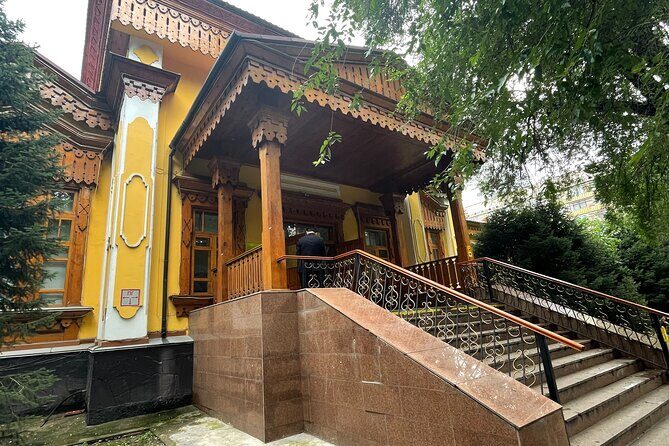
- Zhibek Zholy metro station stories: Bright, themed decoration tied to the Great Silk Road era
- Panfilov Street walk: Cafes and a Soviet-style telegraph building that looks like a web
- Stalin-era architecture notes: Stop-and-look moments at recognizable “types” of buildings
- Park of 28 Panfilovcev focus: An earthquake-surviving cathedral plus WWII monuments
- Green Bazar option: Choose the farmers market route or go by the Arasan bath complex
Walking Almaty by eras, not just streets
This is a true walking city tour, about 3 hours long, with a professional guide leading you step by step. The core idea is simple: you do not just pass sights—you learn how each place fits into Almaty’s timeline, from border-town stories under the Russian Empire to Soviet growth and then modern independence.
The way the guide frames it matters. Instead of listing dates, the tour treats architecture and city planning like evidence. When you look at a building, you also hear why it was built, what problem it solved, and what the people around it were dealing with. That approach makes the walk feel like a guided conversation with Almaty rather than a checklist.
You’ll also get some fun, odd details along the way—exactly the sort that make your photos make sense later. For example, you’ll hear how the city handled running water in the 20th century, and a story about the sea shells used for house facades in the 1960s, thousands of kilometers away from the coast. Those kinds of specifics are memorable, and they’re the reason this tour works even when you’re not a hardcore architecture person.
You can also read our reviews of more walking tours in Almaty



Entering Almaty at Zhibek Zholy Metro Station
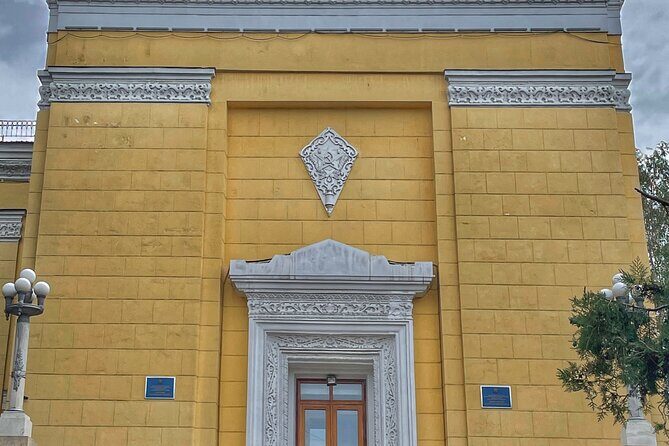
You start at Zhibek Zholy at around 11:00 am, and the walk begins right at the train station/metro hub. A key value here is that the tour treats the metro as a cultural entry point, not just transport. The metro system is new and special, and each station has its own story told through its design.
Zhibek Zholy’s decoration points the discussion back toward very ancient history, tied to the Great Silk Road. In plain terms, the station becomes your “time portal.” It helps a lot if you’re new to Almaty, because you get oriented fast and you also understand how the city likes to connect modern identity to older routes and meanings.
You’ll spend roughly 30 minutes here. Admission is included for this first stop, and the guide will help you see the station in a way that’s easy to miss if you just walk through on your own. Practical tip: arrive a touch early so you can settle into the meeting spot and not feel rushed in a busy transit area.
Panfilov Street: Soviet architecture with street-level charm
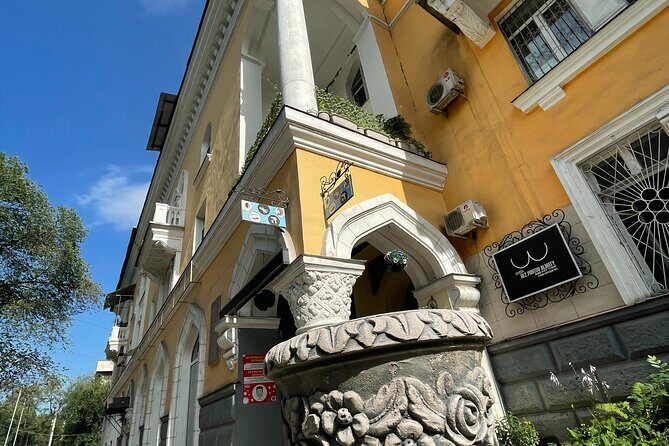
Next you head to Ulitsa Panfilova, a pedestrian street known for cafes and restaurants. That matters because it prevents the tour from feeling like a nonstop “look but don’t touch” experience. You get a real sense of daily life in the middle of the sightseeing.
Here’s where the tour leans into its strongest theme: Soviet-era design that is both serious and a bit strange. You’ll look at the building of the central telegraph, described as having a shape like a shopping net—an easy mental picture that makes the building feel distinctive. The guide also points out how, right from this area, you can see the Kazakh opera and ballet theater, which combines Asian-inspired motifs with European classicism.
You’ll spend about 30 minutes at this stop cluster. The time is enough to get the main architectural points, plus room to look around the street setting. If you like taking photos but hate long waits, this pacing is a plus.
A realistic consideration: if your idea of a city walk includes food tastings or market browsing, Panfilov Street gives ambiance but it’s not a food tour. It’s an architecture-and-urban-form tour, so go in expecting design stories first.
Kunaev Street and the “Gymnasium block” feel
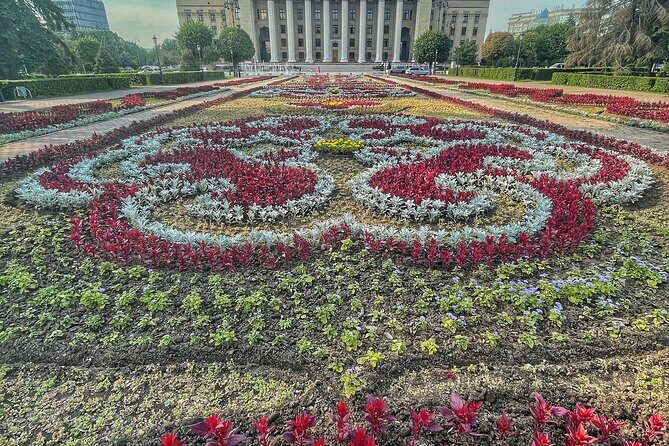
From Panfilov Street the route continues toward Kunaev Street, with more examples of Stalin architecture and mid-century residential areas from the 1940s to the 1960s. This is where the walking format pays off: these areas are easiest to understand when you’re physically moving past them, seeing proportions, materials, and the way streets shape visibility.
The standout detail at this stage is the tour’s mention of a “Gymnasium block.” The buildings connected to pre-revolution high schools survived—schools that were founded by the royal Russian government. The guide uses this thread to connect education, state power, and city development, all without turning it into a textbook.
You’ll likely be here for around 30 minutes. That’s enough time to spot what the guide wants you to notice, but not so long that you feel stuck watching someone else’s pace. It’s a good portion for getting your bearings: you’ll start seeing recurring design themes and you’ll understand why the tour keeps naming specific eras.
Park of 28 Panfilovcev: earthquake memory and WWII monuments
The walk then heads to one of the oldest parks in Almaty: the Park of 28 Panfilovcev. This stop is a shift in tone, from city-building and institutional style to landscape of remembrance.
You’ll see the oldest cathedral in the city, and the guide highlights that it survived the major devastation of the 1911 earthquake. That detail changes how you look at the building. It’s not just a pretty structure; it’s a survivor, a piece of continuity through catastrophe.
Along the park route you’ll also spot a wooden old Russian-style officer club building. That kind of architecture often gets overlooked because it doesn’t look like the biggest landmarks, but on this tour it’s treated as important because it shows how communities lived and worked in earlier periods.
And then there’s the ambitious Soviet monument to the victory in the Second World War. It adds a clear visual anchor to the idea of Soviet identity-making—public monuments that taught people what to remember and how to feel.
This stop runs about 45 minutes, which is the right amount of time for both photos and the story behind them. It’s also the part where you might feel the tour’s broader theme of survival—how Almaty endured nature catastrophes in different times, not just political change.
You can also read our reviews of more guided tours in Almaty

Green Bazar or Arasan Bath House: choose your next flavor of Almaty
The final main option is Zeleny Bazar. If you want a more local, everyday ending, you can continue toward the farmers market feel of the Green Bazar. The tour gives you the flexibility to either go there or head back through another neighborhood stop.
Your alternative route includes the Arasan bath house—a traditional baths complex built in the 1980s. That’s a great choice if you’d rather end with culture you can sense in the street setting, not just through market stalls.
This segment is about 45 minutes. It’s also the part where you can decide what kind of memories you want to leave with:
- If you want something lively and local in tone, go toward Green Bazar.
- If you want something more “Almaty character” and daily-routine cultural, choose Arasan.
Either way, you’ll return to the starting point at Zhibek Zholy, since the tour ends back where it began.
Price and what you actually get for $60
At $60 per person for about 3 hours, the value depends on what you want from a guided walking tour. You’re paying for guided interpretation and a structured route through specific architecture and city-story stops.
What’s clearly included:
- Professional guide services
- Zhibek Zholy ticket (so your first stop isn’t a hassle)
- Mobile ticket and group discount mention (useful if you’re traveling with others)
What’s not included:
- Bottled water
In practical terms, a $60 walk can be a good deal in cities where sight access is costly, but it’s most worth it here if you like learning how the city works—especially through architecture, planning, and history snippets tied to what you can see right then.
Also note the booking feel: this is typically booked about 8 days in advance. That doesn’t mean you must book that early, but it’s a sign the walking format is popular enough to plan ahead.
Bring your own water. Even if the tour is calm, you’ll be on your feet for the full time. Comfortable shoes are a must.
How the “architecture-focused” style will feel in real life
The tour’s style is pretty clear: it’s about moving through decades and even centuries by reading buildings and city layout. That’s why it includes details like the house in the shape of a string-bag and the so-called “Stalin cake house”—quirky labels that help your brain hold onto what you’re seeing.
It also includes a set of problem-solving stories, like how the city tackled running water in the 20th century. That angle is helpful because it turns architecture into human stories. You start to see why certain choices were made.
The only thing to be careful about is expectations. The average rating is 3.8 from five reviews, and at least one review flags a mismatch: the tour can feel like it’s mostly architecture with less variety than some people hoped. If you’re the type of traveler who wants markets, big viewpoints, museum interiors, or lots of hands-on stops, you might feel under-satisfied.
If you’re the type who loves to walk, look, and understand what buildings are trying to say, you’re likely to enjoy this format.
Who should book this Almaty walking tour
I’d point you to this tour if you:
- Like architecture, urban design, and how history shows up in the streets
- Want a structured route with a guide who connects eras quickly
- Enjoy quirky, specific stories (sea shells from far away, water solutions, earthquake survival)
You might skip it if you:
- Want lots of food stops or a market-heavy itinerary
- Prefer museums and indoor history over outdoor architecture and city form
It’s also described as private for your group, so it can work well for couples or small groups who want a consistent pace. Pickup is offered, and the start point is near public transportation, so you’re not locked into one transfer style.
Final advice: should you book?
I think this tour is a smart choice if you want Almaty by layers, where metro stations, Soviet buildings, and park monuments each act like chapters. For the $60 price, you’re buying a guided lens more than you’re buying access to lots of separate attractions.
If you’re someone who travels for a variety of experiences—food, views, and activities—this may feel too concentrated on buildings and street-level history. If you’re good with an architecture-forward walk that still includes memorable human stories and humor, it’s a solid way to get your bearings in Almaty fast.
FAQ
How long is the Guided Walking City Tour in Almaty?
The tour lasts about 3 hours.
Where does the tour start and end?
It starts at Zhibek Zholy in Almaty and ends back at the same meeting point.
What is included in the price?
The guide service is included, and the ticket for the Zhibek Zholy stop is included.
Is pickup available?
Yes, pickup is offered.
Is bottled water provided?
No, bottled water is not included.
What is the cancellation policy?
You can cancel for a full refund up to 24 hours before the experience starts.