REVIEW · ALMATY
Shymbulak to Bogbanovisch Glacier and Oktabriskaya Hike
Book on Viator →Operated by Adam tour · Bookable on Viator
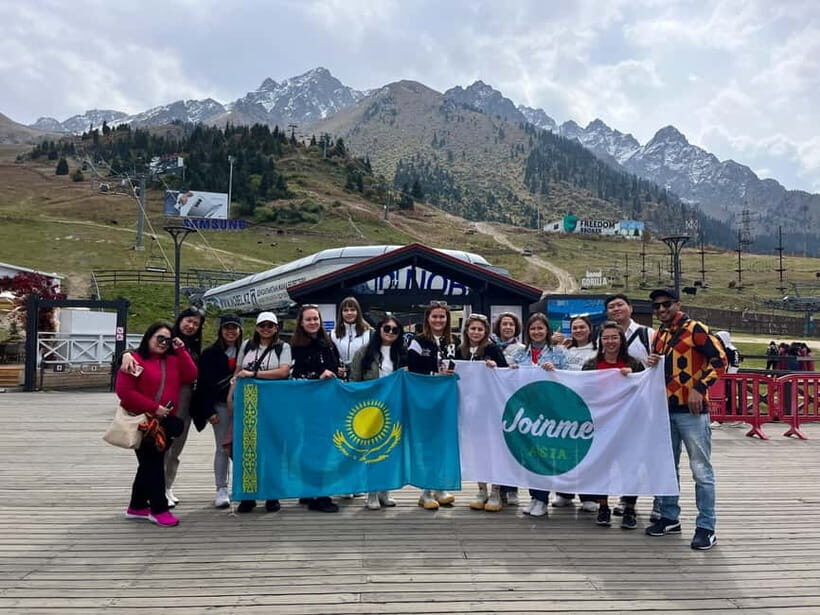
One thing I keep coming back to is how fast you rise into real mountain territory. This day trip from Shymbulak gets you from Medeu by cable car to around 3,200 m, then pushes you on a 2 km one-way trek toward the Bogdanovich Glacier and on to Oktyabrskaya Cave’s ice-and-rock world. I especially like the practical approach: you get spikes, hiking poles, and a helmet, and the guide support is described as patient for people hiking for the first time, with Viktor mentioned as particularly helpful. The main drawback is simple: this is weather-dependent and it’s still a tiring climb at altitude, so you’ll want a steady pace and solid footwear.
You also get a day that balances views with hands-on nature time. The glacier stop isn’t just a look-and-go; you’ll have a chance for photos, plus an outdoor lunch vibe right where the scenery feels big and cold. My other favorite part is the cave visit—Oktyabrskaya is the kind of place where ice formations make you slow down and pay attention to details. The only real consideration is timing: you’re committing about 6–7 hours, and the cable car ticket is extra, so plan that cost upfront.
In This Review
- Key Highlights at a Glance
- The Big Idea: Why This Hike Feels Worth It
- Getting Up to Shymbulak: Medeu Cable Car and Altitude Reality
- The Bogdanovich Glacier Hike: Views, Distance, and the Payoff
- Oktyabrskaya Cave: An Ice-and-Rock Side Trip That Changes the Mood
- Timing and Flow: How a 6–7 Hour Day Actually Feels
- Price and Value: What $110 Really Buys (and What It Doesn’t)
- Who This Tour Suits Best (and Who Should Skip It)
- Safety, Gear, and Photo Spots: Small Details That Make or Break It
- Weather and Flexibility: How to Think About the Mountain Schedule
- Should You Book This Shymbulak Glacier and Oktyabrskaya Cave Hike?
- FAQ
- How long is the hike?
- How far is the hike to the glacier?
- What altitude do we reach?
- Is pickup available?
- What gear is included?
- Is the cable car ticket included in the price?
- Does the tour require a certain fitness level?
- What is the group size?
- What happens if the weather is bad?
Key Highlights at a Glance
- Cable car ride to ~3,200 m for quick altitude and mountain payoff
- 2 km one-way hike to the glacier, with safety gear included
- Oktyabrskaya Cave for a cool, atmospheric ice-and-rock experience
- Gear support: spikes, poles, helmet, and even a sitting pad
- Small group size (max 9) helps you move comfortably and get help fast
The Big Idea: Why This Hike Feels Worth It
This isn’t a sightseeing bus day. It’s a guided walk into high-mountain conditions, where you actually move through the scenery instead of just looking at it. You’ll start at Shymbulak Ski Resort, then climb further into the range’s higher zone, with the glacier and cave giving you two very different “wow” moments in one outing.
What makes it work for most people is the structure. You’re not thrown into a long, technical expedition. The hike is a manageable distance (2 km one way), and the tour is set up for safety and stability—spikes for traction and poles to keep your legs from taking a beating. If you like activities that feel active but not punishing, this format hits the sweet spot.
There’s also something psychologically nice about the pace. You get altitude early from the cable car (around 3,200 m at the third station), so your body adjusts while you’re still warming up rather than hiking from sea level. Then you earn the glacier views with a steady walk rather than a sudden steep start.
You can also read our reviews of more hiking tours in Almaty
Getting Up to Shymbulak: Medeu Cable Car and Altitude Reality
The day begins with the Medeu cable car up to Shymbulak’s higher zone. The tour’s timing includes a ride of about 40 minutes, taking you to the third station at roughly 3,200 m above sea level. That number matters because you’ll feel it—shortness of breath, quicker fatigue, and colder air can show up fast, even if you’re fit.
One practical point: the Shymbulak cable car admission is not included and is listed at $20 per person. Everything else is built around the idea that you’re already paying for your lift up. If you’re calculating your total budget, add that $20 early so the day doesn’t feel more expensive later.
The good news is that the cable car sets you up for success. You arrive at a ski resort where facilities and basic services are present (equipment rentals, cafés, hotels are mentioned as available), so you’re not stuck at an empty platform. It makes a big difference if you need a restroom stop, a hot drink, or a quick gear check before heading out.
My take: treat altitude like a pacing tool, not a punishment. Walk slowly at first, keep your breathing controlled, and don’t feel like you have to “prove” fitness. The goal is finishing and enjoying the views—especially because weather can change plans quickly in mountain regions.
The Bogdanovich Glacier Hike: Views, Distance, and the Payoff
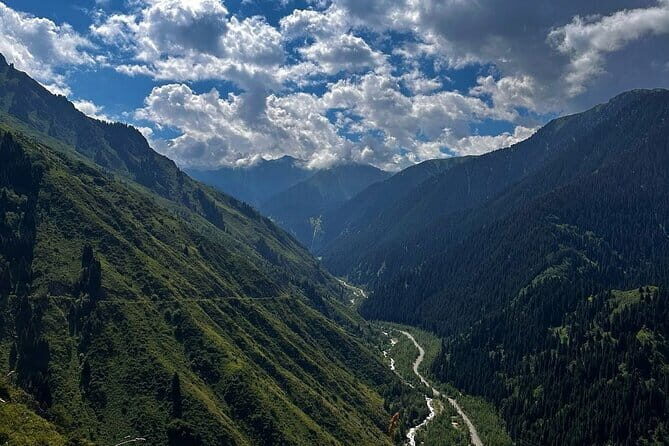
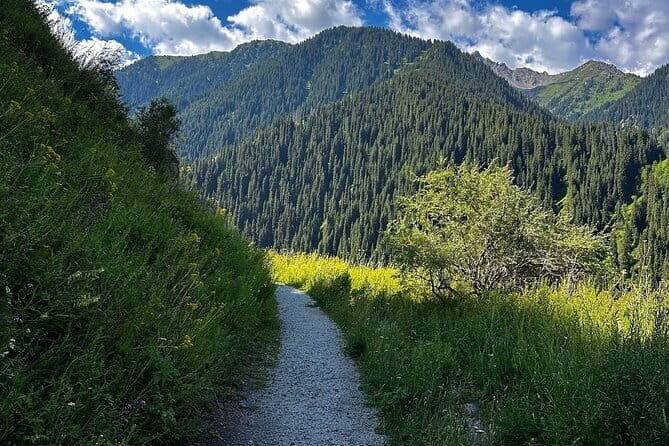
After you’re up high at Shymbulak, the route takes you toward the Bogdanovich Glacier. The glacier stop is timed at about 1 hour 30 minutes, and you’re looking at a hike of roughly 2 km one way. That’s not a marathon distance, but it can feel longer because you’re walking in thinner air and often on uneven terrain.
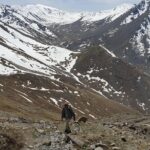
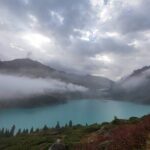
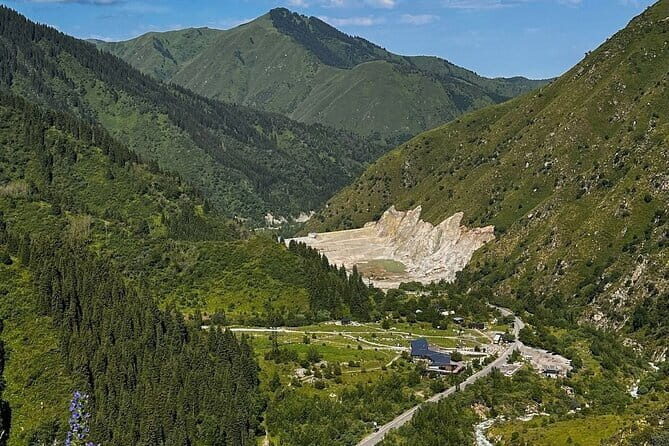
Bogdanovich Glacier is described as sitting around 3,500 m, on the northern slopes of the Trans-Ili Alatau range. Even if you don’t know much glaciology, you’ll still recognize what makes a glacier special: the texture, the pale ice tones, and the way surrounding peaks frame everything. Expect the hike to feel like a gradual reveal—views expand as you move, and the glacier becomes more visually impressive as your elevation increases.
You also get traction help. Spikes are included, and hiking poles are provided as part of your kit. This is a big deal. Walking on icy or snowy sections can be the difference between a confident stride and an anxious shuffle. Poles also help you manage downhill sections, which is often where legs get punished.
Practical note: the glacier portion is listed as admission free, so you’re not paying extra just to reach the ice zone. The value here is that the tour isn’t just transporting you—it’s giving you the tools and guidance to walk safely and enjoy the scenery once you arrive.
If you’re choosing this tour for the glacier photos, aim to slow down once you reach the best viewpoint area. With the right pacing, you’ll have time to capture images without feeling rushed or breathless.
Oktyabrskaya Cave: An Ice-and-Rock Side Trip That Changes the Mood
Oktyabrskaya Cave is where the day shifts from open mountain air to a colder, tighter world. The experience is described as an ice cave tucked in the heart of the mountains, with fascinating ice and rock formations that create a secret-world feel. That’s the kind of setting where your brain naturally quiets down—no wind, no wide panorama—just texture, cold surfaces, and the sense that you’ve stumbled into something rare.
This stop is also tied to the safety kit. Helmets are included, along with spikes and poles. The helmet detail matters because caves introduce head-level hazards you wouldn’t think about in daylight hiking. It’s a small thing, but it shows the tour is designed for more than a casual stroll.
The route includes a “mystery” element in the description—something that sparks curiosity as you explore. Even if you’re not a spelunker, you’ll likely enjoy the cave as a contrast to the glacier. Glacier time is about distance and scale; cave time is about closeness and detail.
The cave is also a reminder to bring the right mental attitude. You’re trading big views for a different kind of experience. If you can switch gears—one moment scanning the horizon, the next paying attention to ice textures—you’ll get more out of the day.
Timing and Flow: How a 6–7 Hour Day Actually Feels
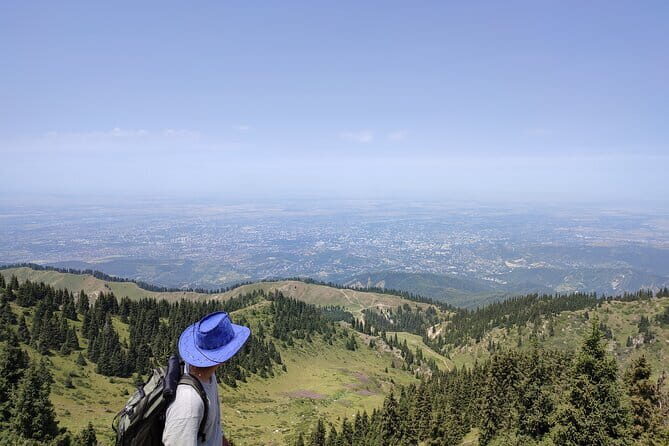
This outing runs about 6 to 7 hours, which is long enough to feel like a full mountain event but short enough that you’re not stuck for an entire day. The structure is basically: cable car up, hike toward the glacier, explore the cave, then outdoor food time.
To make that time work, you should come ready for a rhythm:
- steady walking on the outward sections
- slower movement and photo pauses near viewpoints
- careful steps where traction matters
- a calmer exploration in the cave zone
The tour also includes outdoor lunch time. While the tour doesn’t list lunch as included, it provides a sitting pad, which is practical if you plan to eat outdoors near the glacier or on a cold surface. If you’ve ever tried to sit on rock or snow without a pad, you know why this matters.
Bring your own food plan. Snacks like sandwiches, chocolate, and tea are specifically suggested in the description, and I agree with the logic. High-energy foods help when you’re working at altitude and moving for hours. Tea also warms you up fast, which is exactly what you want when conditions turn chilly.
Also pack water, even though bottled water isn’t included. Dehydration creeps in at altitude, and hiking plus cold weather can trick you into under-drinking.
Price and Value: What $110 Really Buys (and What It Doesn’t)
The price is listed at $110 per person, and for that you get several tangible benefits:
- an English-speaking guide
- spikes for shoes
- hiking poles
- helmet
- sitting pad
You don’t have to show up with specialty gear, and that’s where the value is. Buying spikes and poles separately can cost time and money—and not every traveler owns the right kind of traction gear. The tour also handles the “how do we do this safely?” part with equipment and guidance.
The main extra cost is the cable car: $20 per person for the Shymbulak cable car admission. That’s straightforward, but you should still treat it as part of the real total budget. Once you add it, you’re effectively paying $130 per person for the day.
What you’re also paying for is a tight experience design. You’re not just visiting two attractions; you’re guided between them in a high-altitude setting where getting it wrong would mean a miserable day. The small group limit (max 9) supports that too, because you’re not fighting crowds on narrow or icy sections.
My advice: if you like guided hiking and you don’t want to rent gear, this price is reasonable. If you’re a confident self-led hiker with your own traction gear and you already know the route, you might feel the guide cost more than the gear cost. For most visitors, though, the included equipment and English-speaking support are worth it.
Who This Tour Suits Best (and Who Should Skip It)
This tour is rated for travelers with moderate physical fitness. That’s the right kind of wording because it suggests you don’t need to be an athlete, but you do need to be ready for sustained walking at altitude.
You’ll probably be a great match if:
- you can comfortably walk 2 km on uneven terrain
- you’re okay with colder conditions at 3,200–3,500 m
- you want glacier and cave in one day without planning every step
- you prefer small groups and guided help rather than doing it alone
You might want to think twice if:
- you struggle with uphill walking or fatigue at altitude
- you’re nervous about icy traction even with spikes
- you want a totally relaxed pace with no exertion
A helpful detail from the experience style is that guides are described as friendly and patient, including support aimed at beginners and even mature participants. That doesn’t mean it’s easy, but it does suggest the group is treated with care and people aren’t left to figure everything out alone.
Safety, Gear, and Photo Spots: Small Details That Make or Break It
The equipment list isn’t “nice to have.” It’s central to how this day stays enjoyable. Spikes and poles help prevent slipping and reduce leg strain. A helmet is included for the cave part, where head protection makes sense. A sitting pad is provided so you can stop comfortably without turning lunch into a cold, uncomfortable chore.
I also like that the tour is explicit about gear for stability. A lot of mountain experiences fail when guests show up unprepared. Here, the tour gives you the core items needed to move confidently in likely cold, traction-heavy conditions.
For photos, plan for cold hands. Even when you’re moving, the air can stay sharp up high. Keep gloves accessible, and consider a quick wipe for lenses or phone screens if moisture forms.
And remember: your best glacier shots come from paying attention to angles and pause timing, not from rushing. If you walk smart and keep a steady pace, you’ll have enough minutes to enjoy the ice without the frantic feeling that sometimes hits on day tours.
Weather and Flexibility: How to Think About the Mountain Schedule
This experience requires good weather. That’s not a marketing line—it’s the reality of glacier and cave conditions. If weather is poor, you’ll be offered a different date or a full refund.
I recommend building your planning around this. Don’t schedule your entire Almaty trip so tightly that losing one mountain day will ruin everything. Keep some buffer time so you can take the alternate date if conditions change.
Also, pack for changeable conditions. Even when skies look good in town, mountains can be different. Layers, warm gloves, and a hat are smart. If you run warm easily, you still want a top layer you can adjust.
The bottom line: the day is worth it, but the mountain chooses when it’s most comfortable. Go with the flow and treat the weather decision as part of the experience.
Should You Book This Shymbulak Glacier and Oktyabrskaya Cave Hike?
If you want a high-altitude day that mixes glacier scenery with an ice cave—and you appreciate safety-focused guiding—then I think this is an easy “yes.” The included gear, English-speaking support, and small group size are the real drivers of value. You’re also getting a full mountain story in one outing: cable car altitude, glacier views, then cave atmosphere.
Book it if:
- you’re comfortable with moderate hiking effort
- you want traction and helmet support without renting
- you want a guided route up to 3,200 m and toward the 3,500 m glacier area
Skip it if:
- you’re likely to struggle with fatigue at altitude
- you expect a walk that feels fully casual
- you’re traveling with a tight schedule and can’t handle a weather shift
If you’re the type of traveler who likes your travel days a little active and a lot real, this hike checks the boxes.
FAQ
How long is the hike?
The tour is approximately 6 to 7 hours.
How far is the hike to the glacier?
The hike is about 2 km one way.
What altitude do we reach?
You take the cable car to Shymbulak’s third station at around 3,200 meters, and the glacier area is described as being around 3,500 meters.
Is pickup available?
Pickup is offered.
What gear is included?
You receive spikes for shoes, hiking poles, a helmet, and a sitting pad.
Is the cable car ticket included in the price?
No. The Shymbulak cable car admission is listed separately at $20 per person.
Does the tour require a certain fitness level?
It’s recommended for travelers with moderate physical fitness.
What is the group size?
The maximum group size is 9 travelers.
What happens if the weather is bad?
If canceled due to poor weather, you’ll be offered a different date or a full refund.