REVIEW · SHYMKENT
The Silk Road tour of Kazakhstan
Book on Viator →Operated by Turan Asia · Bookable on Viator
Shifting sands, ancient trade routes, real monuments. A Silk Road route in Kazakhstan isn’t just a theme, it’s a map of how cities rose on commerce. This two-day plan ties together Shymkent’s everyday life with Otrar’s merchant past and then moves on to Turkestan and Sauran’s fortress ruins.
I especially like how the tour keeps things practical: you get airport and hotel transfers, plus city time that doesn’t feel like a rushed scavenger hunt. I also like the way the guiding is handled—one recent guest specifically praised a helpful guide with perfect English who explained the sites clearly and showed extra details along the way.
The main drawback to consider is pacing. With only two days and multiple stops, you’ll spend limited time at each location, so this is best if you’re happy with “big picture first” history rather than slow wandering.
In This Review
- Key highlights that make this Silk Road tour worth your time
- The Silk Road in Kazakhstan starts with Shymkent’s modern heartbeat
- What $347 really covers: transfers, tickets, and less friction
- Day 1: Shymkent city time and why Otrar matters
- Shymkent orientation: get your bearings fast
- Ayna Bazaar: the trade route in miniature
- Otrar (Farab): a trading oasis that built an identity
- Day 2: Turkestan’s UNESCO mausoleum complex and Sauran’s fortress feel
- Turkestan: Khoja Ahmed Yasawi’s mausoleum complex
- Sauran: small ruins with big strategic stories
- Back to Shymkent: downtime after concentrated history
- Pacing, weather, and group size: how to plan your mindset
- Who will enjoy this Silk Road tour most
- Should you book this Silk Road tour of Kazakhstan?
- FAQ
- What places does the tour cover?
- How long is the Silk Road tour of Kazakhstan?
- Is pickup available?
- Are entry fees included?
- What does the price include?
- How big is the group?
- What time does the tour start?
- Is the tour cancelled for bad weather?
- Can I cancel for free?
Key highlights that make this Silk Road tour worth your time
- Shymkent + Ayna Bazaar for a real taste of southern daily life alongside the past
- Otrar (Farab), a key Silk Road trading oasis with ruins you can actually walk through
- Turkestan’s UNESCO-listed mausoleum complex focused on one of Central Asia’s best-known sacred sites
- Sauran’s intimate fortress ruins, giving you a feel for a strategic city built for defense and trade
- Small group size (max 12), which helps your guide keep things organized and personal
- Transfers and entry fees included, so you don’t waste time budgeting on the ground
The Silk Road in Kazakhstan starts with Shymkent’s modern heartbeat
For many people, the Silk Road sounds like deserts and legends. In Kazakhstan, it feels more grounded than that. You start in Shymkent, the third-largest city in the country by population, and that matters because it shows you how the region lives today while the ancient route still shapes where people settled and traded.
The morning arrival-to-tour flow is simple: you connect with your guide and then head out for a city orientation. You’re not just being dropped into ruins; you get context first, so the later stops click faster. Then you step into Ayna Bazaar, where the shopping and chatter make the idea of trade feel immediate. It’s one thing to hear that caravans moved goods. It’s another to stand in a southern market and understand why a place like this would matter.
If you like history that connects to daily life, this is a smart way to start. You’ll get a sense of place before the tour turns archaeological.
You can also read our reviews of more tours and experiences in Shymkent.

What $347 really covers: transfers, tickets, and less friction
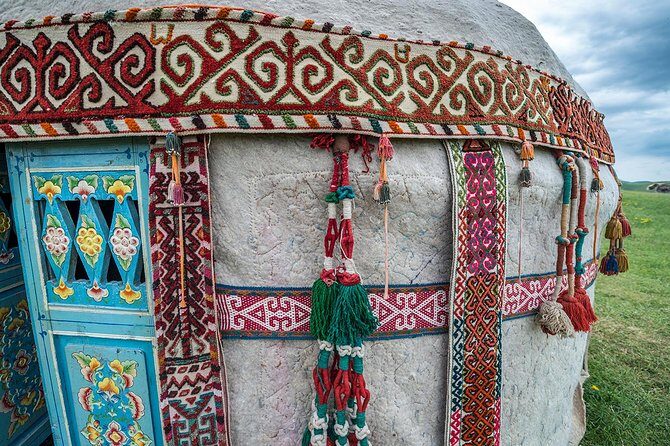
At $347 per person for about two days, the value depends on one question: do you want to fight logistics while you’re trying to see sites? Here, the tour reduces that headache.
Included basics that affect your day-to-day experience:
- Airport and hotel transfers
- Accommodation and transport
- All entry fees included
- Pickup offered
- Mobile ticket
That bundle can be a big deal in Kazakhstan, where public transport may work, but getting the right timing for archaeological sites and city hubs can be tricky. Paying for everything separately often turns a “simple day trip” into a spreadsheet. This setup keeps your mental load lower, which is exactly what you want on a short, two-day route.
Also note the group size: maximum 12 travelers. Smaller groups generally mean less time waiting around and more time with your guide when questions pop up.
Day 1: Shymkent city time and why Otrar matters
Day 1 is split between city atmosphere and a classic Silk Road site. The goal is to build a sense of Kazakhstan’s trade geography, not just check boxes.
Shymkent orientation: get your bearings fast
You’ll meet your guide and begin with a Shymkent city tour. The time is tight—around 30 minutes—but it’s enough to set the stage. Think of it as an on-ramp: you learn how the city functions now, which makes the later “why here?” question easier.
Ayna Bazaar: the trade route in miniature
Then comes Ayna Bazaar, also about 30 minutes. This is the part I’d encourage you to slow down a little. Markets are where you notice what locals buy and how the shopping rhythm works. Even if you don’t plan to buy much, it helps you understand the real Silk Road logic: goods moved through networks, and networks needed places where people gathered.
If you’re the kind of traveler who likes photos that don’t look staged, this market time usually delivers better material than another viewpoint stop.
Otrar (Farab): a trading oasis that built an identity
In the afternoon, you head to the Archaeological Site of Otrar, also known as Farab. This site is where the Silk Road idea gets historical weight. Otrar is described as a commercial oasis on the Great Silk Road, dating roughly from 1 BC to 15 AD, and it’s also presented as a major center of exchange.
You’ll spend about two hours here. That’s a good length for archaeological stops because you can actually look, read the setting, and connect the story. Otrar isn’t just an abstract name; the ruins and reconstructions help you picture the kind of economy and settlement that could thrive in this corridor.
One consideration: archaeological sites can feel open and exposed. If the weather turns, you might have less comfort than you want. The tour is described as requiring good weather, so go into this expecting that outdoor time matters.
Day 2: Turkestan’s UNESCO mausoleum complex and Sauran’s fortress feel
Day 2 shifts from trade centers to sacred architecture and then to defensive city ruins. The variety is part of why the route works. You see how cultures expressed power through both commerce and belief.
Turkestan: Khoja Ahmed Yasawi’s mausoleum complex
You start with a visit to the Mausoleum of Khoja Ahmed Yasawi in Turkestan. The description highlights it as the most well-known UNESCO World Heritage site in Kazakhstan, within the complex of Hodja Ahmed Yasawi (the same figure, spelled in the tour description).
You’ll have about two hours here. That amount of time usually gives you room to absorb both the monument’s importance and the details of how the site is organized. This is also a stop where your guide’s explanations matter. Sacred architecture rewards someone who can translate what you’re seeing into meaning without turning it into a lecture.
If you care about Central Asian spiritual history or architecture, this is the emotional center of the trip.
Sauran: small ruins with big strategic stories
After that, you transfer to Sauran, an ancient city-fortress. The tour describes Sauran’s span from about the 12th to 18th centuries, and notes that it served as a strategic and trading city. It also states that from the 12th century to the 16th century, Sauran was the capital of the Kazakh-Mongol khanate Ak Horde.
You’ll spend about one hour at the ruins. This is shorter than Otrar and Turkestan, so you’ll want to focus your attention. Look for how the landscape supports the fortress idea: the sense of a place meant to control routes and defend a settlement. One hour is enough if you’re paying attention to your guide and moving with the group.
If you’re expecting a big museum-like site, Sauran will feel more quiet and “earth-and-stone” than you might imagine. But that’s also why it can be memorable.
Back to Shymkent: downtime after concentrated history
Finally, you transfer back to Shymkent, with about five hours in that return window. That’s a lot of time, and it helps prevent Day 2 from ending the same way it started—where everyone is running on empty.
Use that time to reset. Review what you saw, plan what you want to ask your guide if there’s still time, and keep your energy for a comfortable evening in Shymkent.
Pacing, weather, and group size: how to plan your mindset
This experience is roughly a 2-day loop with a start time of 10:00 am. With multiple stops across two days, the pacing leans toward efficient sightseeing. That’s not a complaint; it’s just the kind of format this is.
Here’s how to make the pacing work for you:
- If you want deep reading of every sign, this may feel fast. Instead, aim to take strong notes and let your guide fill in gaps.
- If you like movement plus context, you’ll probably enjoy it. The stops are arranged so each day has a different theme: trade and city life first, then sacred architecture and fortress ruins.
- Dress for outdoor time. The tour specifically notes that it requires good weather, so the plan expects decent conditions.
Also keep in mind the group maximum of 12. That’s small enough for better interaction, but it still means you’ll be on a shared schedule.
Who will enjoy this Silk Road tour most
This Kazakhstan route is ideal if you:
- Want Silk Road history without driving yourself
- Like seeing multiple layers of the region—city markets, merchant hubs, sacred sites, and frontier fortresses
- Prefer guided interpretation with clear English (a recent review praised the guide’s perfect English)
It’s also a good match for travelers who don’t want to spend days on logistics. The included transfers and entry fees reduce the most annoying parts of trip planning.
If you’re the kind of traveler who hates being on a timetable, you might find the stop lengths feel short. But if you want a well-organized snapshot of key Silk Road locations in Kazakhstan, this tour fits that job.
Should you book this Silk Road tour of Kazakhstan?
I’d book it if your priority is a smooth, guided two-day introduction to the Silk Road in Kazakhstan. The price becomes easier to justify when you factor in accommodation, transport, airport/hotel transfers, and all entry fees. That’s the kind of package that helps you spend your limited time on site instead of figuring out tickets and schedules.
I’d think twice if you’re craving long, slow museum-style visits or you know you’re sensitive to changing outdoor conditions. The tour also depends on good weather and requires a minimum number of travelers, so it’s smart to stay flexible.
Overall, this is the kind of itinerary that’s built for people who want strong takeaways: how Shymkent’s trade atmosphere connects to Otrar’s merchant role, how Turkestan’s sacred architecture reshapes the mood, and how Sauran’s fortress ruins show another side of power along the route.
FAQ
What places does the tour cover?
It focuses on Shymkent, the Ayna Bazaar market, the archaeological site of Otrar (Farab), the Mausoleum of Khoja Ahmed Yasawi in Turkestan, and the ruins of Sauran.
How long is the Silk Road tour of Kazakhstan?
It runs for 2 days (approx.).
Is pickup available?
Yes, pickup is offered.
Are entry fees included?
Yes. All entry fees are included.
What does the price include?
The tour includes accommodation and transport, plus airport and hotel transfers.
How big is the group?
The maximum group size is 12 travelers.
What time does the tour start?
The start time is 10:00 am.
Is the tour cancelled for bad weather?
The experience requires good weather. If it’s canceled due to poor weather, you’ll be offered a different date or a full refund.
Can I cancel for free?
Yes. You can cancel up to 24 hours in advance for a full refund.