REVIEW · NUR SULTAN
Trip to Kazakh family of Eagle hunters in Astana (6 hours)
Book on Viator →Operated by Turan Asia · Bookable on Viator
Eagles and yurta food in six hours. This private visit near Astana/Nur-Sultan brings you into a real yurta routine, not a museum stop, and you can help make baursak and other Kazakh snacks. It’s a rare way to see how eagle-hunting culture lives day to day, alongside a family that still keeps the skills and stories going.
I also love the way the program gives you a show and then context, especially with the Berkut-style eagle performance featuring endangered golden eagles. The possible drawback: the lunch can include horse meat, and the afternoon activities involve archery and horseback riding, so it’s best if you’re comfortable with hands-on, active culture—not just watching from the sidelines.
In This Review
- Key highlights you’ll actually care about
- From Astana to a traditional eagle-hunter family day
- Yurt-life basics: baursak, kurt, and family roles you can see
- The lunch that feels like Kazakhstan: shorpo, kese, and beshbarmak
- Berkut with endangered golden eagles: the show and the meaning
- Horseback riding and Kazakh archery: learning the skills, not just the story
- Dombra music and the guide role of Yerlan
- Price and value: what $290 buys you (and what to watch for)
- Who this Kazakh eagle hunter experience is best for
- Should you book this eagle-hunter family tour?
- FAQ
- How long is the Kazakh eagle hunter family experience?
- What does the tour include?
- Is this a private tour?
- Where does the tour start and end?
- Do you offer pickup, and is there a mobile ticket?
- Can vegetarians be accommodated?
- What is the cancellation policy?
Key highlights you’ll actually care about
- Hands-on yurta kitchen time making baursak and rolling kurt with the family
- Berkut show with endangered golden eagles so you’re seeing the tradition live
- Lunch that’s eaten the traditional way, including beshbarmak and shorpo broth
- Horseback riding plus an archery lesson, taught for beginners
- Private tour feel, with only your group and guide support from Yerlan
From Astana to a traditional eagle-hunter family day
This is a full, easy-in-one-go cultural afternoon. You start in Astana/Nur-Sultan and head out for a six-hour experience that’s built around a Kazakh household and their eagle-related traditions. It’s private, so you’re not weaving through strangers while you’re trying to ask questions or watch what’s happening in the moment.
The best part is how the schedule is structured. You don’t just arrive, watch a performance, and leave. You move through several parts of everyday life: yurta arrival, food preparation, a big family lunch, and then skills-based activities in the afternoon. That flow matters because eagle hunting isn’t a standalone show here—it’s part of a larger way of life.
Also, the tour includes pickup and a mobile ticket. That sounds minor until you’re in a place where “how do I get there?” can turn into your whole day. Here, it’s handled for you, and you return to the meeting point at the end.
You can also read our reviews of more tours and experiences in Nur Sultan.
Yurt-life basics: baursak, kurt, and family roles you can see
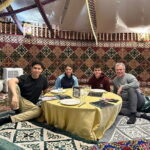
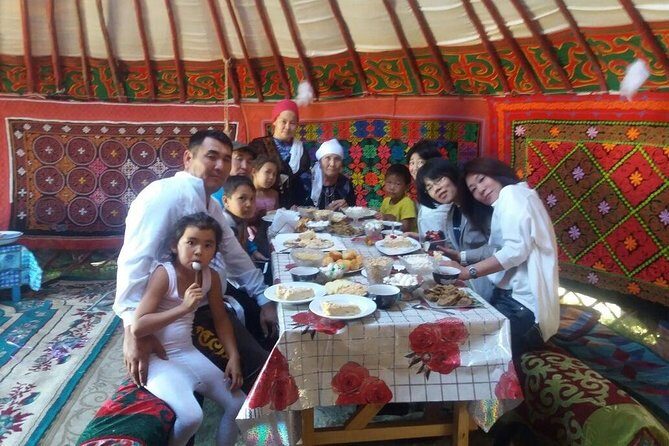
When you enter the yurta, you quickly understand that this is a household operation, not a stage set. Women in the family are active in the space, and you’ll see cooking happening right away. One highlight is joining the women during the snack preparation—this is where the experience becomes more personal and more fun.
You’ll likely get hands-on with baursak, those round, fluffy fried pastries. You may also get involved with rolling kurt, a salty snack made from cottage cheese. Even if you’re not a confident cook, this part is forgiving. You’re there to learn how the process works and to share the rhythm of the kitchen, not to produce Michelin-level pastry.
This is also the moment to practice being curious in a respectful way. Ask simple questions. Where the ingredients come from. What gets made first. What’s saved for later. If you’re the type who likes conversations, you’ll find plenty of openings here because you’re working side by side with people who know exactly what they’re doing.
The lunch that feels like Kazakhstan: shorpo, kese, and beshbarmak
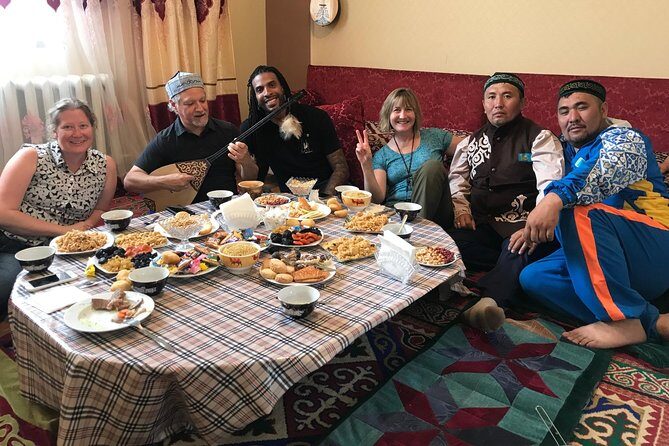
After the food prep, you’ll sit down with the family for a home-style lunch. This is where the tour leans hard into authentic eating habits, and that’s a good thing if you’re up for it.
You start with shorpo, a mutton broth served in bowls called kese. It’s served before the main course, like a warm-up for the meal. It also tells you something about the country’s food logic: comfort and nourishment first, then the heavier dishes.
The main dish is beshbarmak. Expect boiled dough shaped like squares (the description compares it to lasagna), served with lots of horse meat, beef, and onions. The name connects to a nomadic tradition: eating without cutlery, using your hands. Yes, you can try beshbarmak that way. The goal isn’t to turn it into a challenge. It’s that the dish is meant to be eaten in a way that matches how food was handled on the move.
What I like about this lunch setup is the balance of “comfort” and “structure.” It’s not just a plate of food. There’s a sequence—broth first, then the main dish—so you know what you’re looking at and why it’s served that way.
A practical note for your comfort: if you’re sensitive to eating with your hands or you strongly avoid certain meats, talk to your guide ahead of time. In one case from this program, the guide Yerlan communicated with the family to help accommodate vegetarians by requesting a non-meat dish. That suggests requests can be taken seriously, but don’t assume every dietary need can be handled the same way every day.
Berkut with endangered golden eagles: the show and the meaning
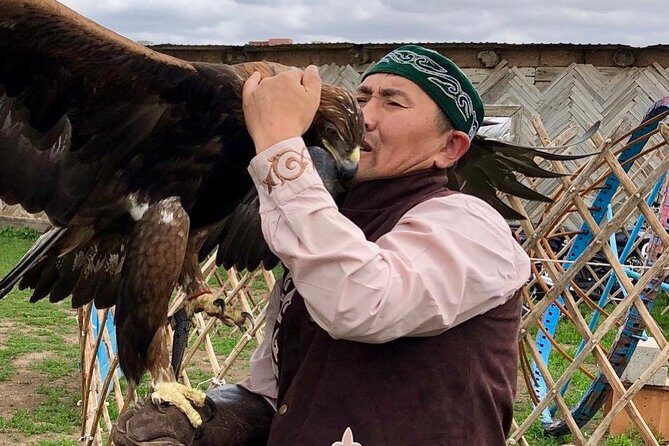
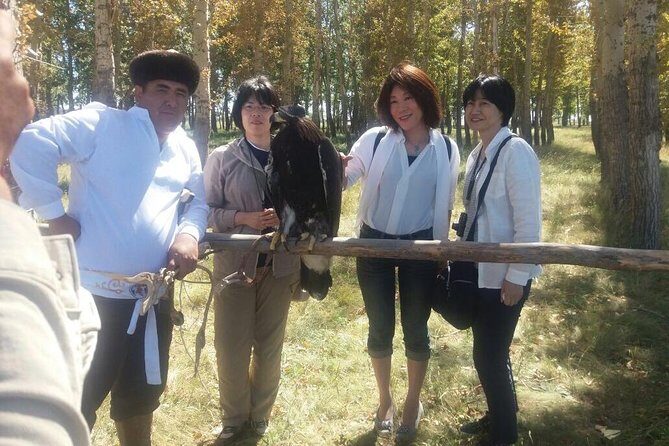
The tour includes a Berkut-style eagle performance featuring endangered golden eagles. This is the headline cultural moment for many people, and it’s handled in a way that feels grounded in tradition rather than just entertainment.
Here’s what you’re really seeing when you watch a Berkut show: the connection between an eagle hunting family and their knowledge of training, timing, and the birds’ behavior. It’s not only a display of skill. It also shows how the family preserves a tradition that’s rare to find in big cities.
If you’ve seen Berkut eagle clips on TV or YouTube, you might recognize parts of the choreography. What you don’t get from a screen is the immediacy—how the space changes when the birds are involved, how quickly everyone focuses, and how you can pick up smaller cues while you’re watching live.
Because the golden eagles are described as endangered, it also adds a layer of respect. You’re not consuming a mascot-like experience. You’re watching a living tradition tied to conservation and serious handling practices. In a good program, that feeling comes through as you observe rather than rush to take photos and move on.
Horseback riding and Kazakh archery: learning the skills, not just the story
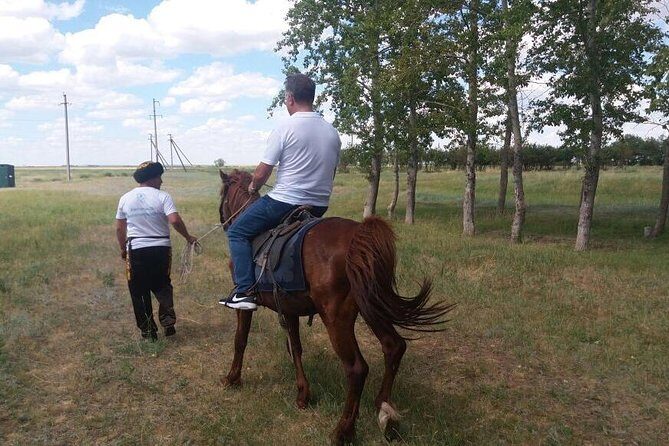
After lunch, the afternoon shifts from food and conversation into active culture. The program includes horseback riding and then an archery lesson.
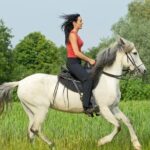
Horseback riding matters because eagle hunting is tied to open-country movement and the travel logic of nomadic life. You don’t need a background in riding to benefit from this. The structure is built to make the lesson doable as part of a guided experience.
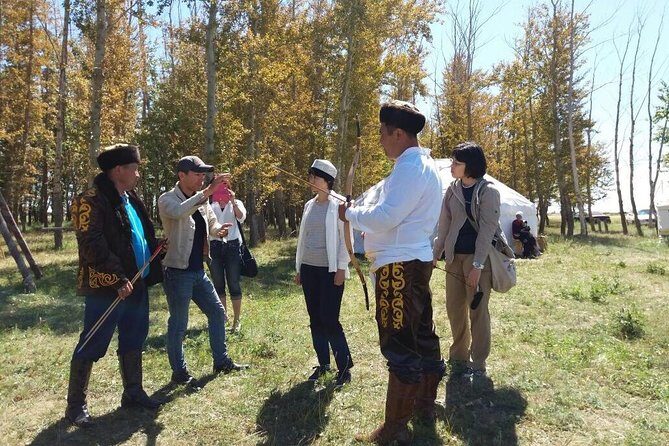
Then you’ll join the head of the house for archery. If you don’t know the art, the host teaches you. That’s a big deal. Too often, “archery lesson” turns into a quick demo and a take-it-or-leave-it session. Here, the emphasis is on learning, and you’re taught by someone in the household context of the tradition.
The tone of the experience changes here. Earlier, you’re in the yurta kitchen and dining rhythm. Now you’re outside, listening for cues, practicing form, and getting immediate feedback. Even if you’re not great at archery the first time, the value is in learning what the movement should feel like and how it links to the broader culture you’ve been hearing about.

Dombra music and the guide role of Yerlan
There’s a cultural glue that connects all parts of the day, and it’s not only the activities. It’s the music and the explanation.
You’ll hear dombra, the Kazakh instrument described as having a special status among national instruments. In a moment like that, the day stops being a checklist. It becomes more like a story told in multiple languages—food, sound, and hands-on skills.
And you’ll benefit from having a guide who can translate the meaning without steamrolling the family’s pace. In one group experience, Yerlan communicated clearly and supported the family with practical details like requesting a non-meat dish for vegetarians. That kind of guide work matters because it protects the experience from misunderstandings and helps you get more out of what you’re seeing.
If you’re the kind of traveler who likes to ask questions—how eagle hunting is passed on, what’s changing, what still stays the same—you’ll probably enjoy this part most. The guide doesn’t just point. He helps you connect the dots.
Price and value: what $290 buys you (and what to watch for)
At $290 per person, this isn’t a budget excursion. But it can still feel like good value if you think about what’s included in one block of time.
You’re paying for a full day segment that bundles:
- a private visit with a Kazakh family
- yurta food experiences (baursak and kurt activities)
- a traditional lunch with shorpo and beshbarmak
- the Berkut show with endangered golden eagles
- horseback riding and a hands-on archery lesson
- pickup service and a mobile ticket
The private part matters, because it reduces the friction. You’re not stuck waiting in a larger group line, and you can ask questions in the flow of the day. For couples or small groups, it often works out better than piecing together separate tours like a show + lunch + activity blocks.
What to watch for is the kind of traveler you are. If you want only wildlife viewing with zero cultural interaction, you might feel like the day is too broad. If you love food, music, and skill lessons, it’s a strong fit because the eagles are one piece of a larger cultural package.
Also, remember that the lunch includes horse meat in the main dish. Even if you’re used to trying new foods, this is a clear “pay attention” item for your personal comfort.
Who this Kazakh eagle hunter experience is best for
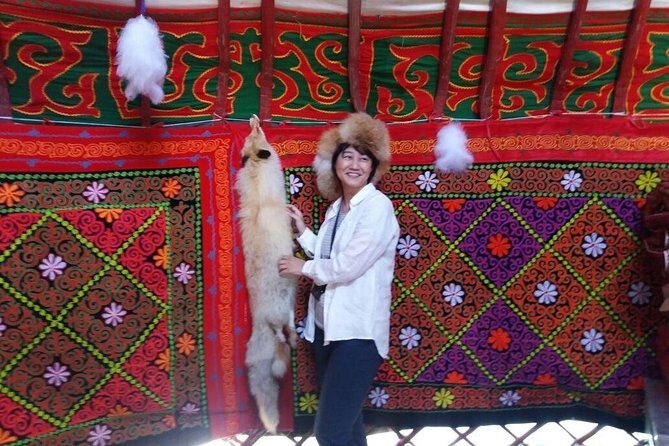
This works best for travelers who want authenticity with structure. You’ll like it if you:
- enjoy family-style cultural experiences more than big museum settings
- want hands-on food learning, not just tasting
- are curious about eagle hunting traditions and how they’re kept alive
- feel comfortable with an active afternoon (riding + archery)
It may not be ideal if you’re avoiding meat entirely without a workable alternative, or if you don’t want horseback riding or close-range archery practice. The program says most travelers can participate, but the activities are still activities, and your body matters.
It’s also a good choice if you appreciate guide support. Yerlan’s role in communicating dietary needs in at least one instance shows that your requests can carry weight when you speak up clearly.
Should you book this eagle-hunter family tour?
If you want a day that blends Kazakh household culture with a Berkut golden eagle show—and you’re excited about joining in with food, music, and skill lessons—then yes, I think you’ll be glad you booked it.
If you’re picky about meat choices, hate eating by hand, or want a low-effort sit-and-watch experience only, consider carefully. The program is built around tradition as practiced, including the foods and the activities that come with it.
My practical take: book it if you’re open-minded, active enough for horseback and archery, and ready to treat this as a real family day. If that sounds like your kind of travel, this is the sort of outing you’ll remember more for the people and the rhythm than for a single photo.
FAQ
How long is the Kazakh eagle hunter family experience?
It lasts about 1 day and is listed as 6 hours.
What does the tour include?
You get a Berkut show with golden eagles, a Kazakh lunch and culinary activities, and time for horseback riding and an archery lesson.
Is this a private tour?
Yes. It is a private tour/activity, so only your group participates.
Where does the tour start and end?
It starts in Astana, Kazakhstan, and ends back at the meeting point.
Do you offer pickup, and is there a mobile ticket?
Pickup is offered, and you receive a mobile ticket.
Can vegetarians be accommodated?
The program includes a case where the guide Yerlan asked the family to provide a non-meat dish for vegetarians. You should share dietary needs when booking.
What is the cancellation policy?
Free cancellation is available up to 24 hours in advance for a full refund. Changes within 24 hours aren’t accepted.