REVIEW · NUR SULTAN
Private History Tour in the City of Kazakhstan
Book on Viator →Operated by TravelWithUs · Bookable on Viator
Nur-Sultan history feels like future-proofing. I like the way the tour starts at Bayterek Tower and gets you inside for the handprint wish, and I also like the fast switch to modern icons like Khan Shatyr. One drawback to plan for: with about three hours total, you’ll want to keep photo stops crisp so you don’t feel rushed.
This is a true private experience with pickup offered and a professional English/Russian-speaking guide, plus bottled water. For $100 per person, the value hinges on how much you enjoy guided context—because the stops are major, and the story is where it really clicks.
In This Review
- Key things I’d watch for
- Bayterek Tower: your 30-minute Tree of Life moment
- Khan Shatyr and the futuristic city mood
- Independence Square to Kazak Eli: sovereignty you can measure
- Peace and Reconciliation Pyramid: faith politics with a shape
- National Museum iceberg and the long view from 2014
- Hazret Sultan Mosque and the dome scale question
- Triumphal Arch: prosperity tied to 20 years of independence
- Museum of the Energy of the Future: alt power, 8 floors
- Astana Grand Mosque: modern and spacious, opened in 2022
- Saksaul meal option: Kazakh cuisine on your schedule
- Price and logistics: does $100 pay off?
- What it feels like with a strong guide (Didara is a standout example)
- Who this private Nur-Sultan history tour is best for
- Should you book this private history tour?
- FAQ
- Where does the tour start?
- How long is the tour?
- Is pickup included?
- What’s included in the price?
- Are admission tickets included for all stops?
- Do I need to pay extra for food?
- Does the tour include Khan Shatyr entry?
- Is this a private tour or a group tour?
- What if the weather is bad?
Key things I’d watch for
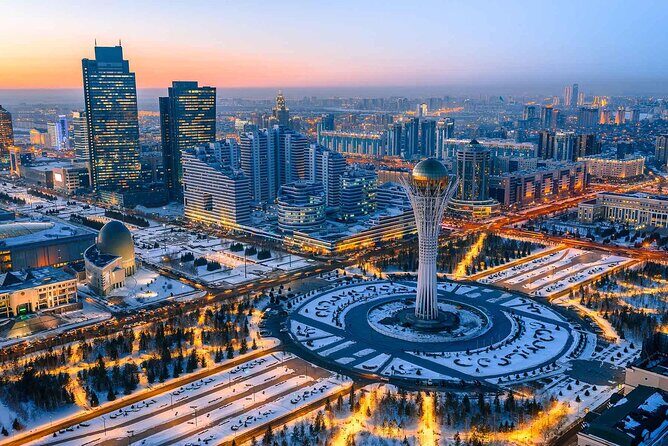
- Bayterek Tower handprint wish inside the monument sets the tone right away.
- Khan Shatyr time is flexible (up to 30 minutes inside if you want).
- Independence Square pairs with big-symbol monuments like Kazak Eli and the Independence-focused Palace area.
- You get modern Kazakhstan in the mix through the Energy of the Future museum and new religious architecture.
- Food is optional: you can add a Kazakh meal, but it’s not part of the base price.
Bayterek Tower: your 30-minute Tree of Life moment
Your tour begins at Bayterek Tower, Nur-Sultan’s most recognizable city symbol. The key idea here is the legend of the Tree of Life—an old-style metaphor used to explain the country’s ongoing growth. You don’t just stand outside for a postcard shot. You go inside, which is a huge difference in how these monuments land.
Inside, you’ll see the handprint of N.Nazarbayev (the First President of Kazakhstan). It’s set up so you place your wish there. Even if you’re not big on wish rituals, it’s a great way to “enter” the story instead of skimming past it.
Practical tip: because this stop is about 30 minutes with an admission ticket included, it’s worth arriving ready to spend those minutes fully. If you like structure, this start will feel efficient.
You can also read our reviews of more city tours in Nur Sultan

Khan Shatyr and the futuristic city mood
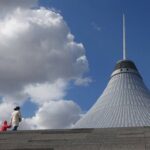
After Bayterek, the vibe shifts toward modern architecture—fast. Khan Shatyr is the giant, tent-like complex often described as the biggest Shatyr in the world, designed by British architect Norman Foster. This is the part of the trip that makes Nur-Sultan feel like it’s building its identity in real time.
You may spend up to 30 minutes inside Khan Shatyr if you ask for it. That optional window matters: if you love architecture, you can use it well. If you just want the exterior and a quick walk-through, you can keep the pace moving.
There’s also a stop for theater facades, mostly aimed at photo time. The tour notes this is flexible depending on your interests—so if you’re the type who cares about design lines, you’ll likely enjoy this interlude. If you’d rather spend every minute on museums or interiors, you can treat it as a quick camera break.
The main consideration here: futurist buildings can look impressive, but they can also become “seen-and-gone” if you don’t have a guide connecting them to Kazakhstan’s past and present. The guide’s job is to do that bridging—so don’t be shy about asking questions.
Independence Square to Kazak Eli: sovereignty you can measure
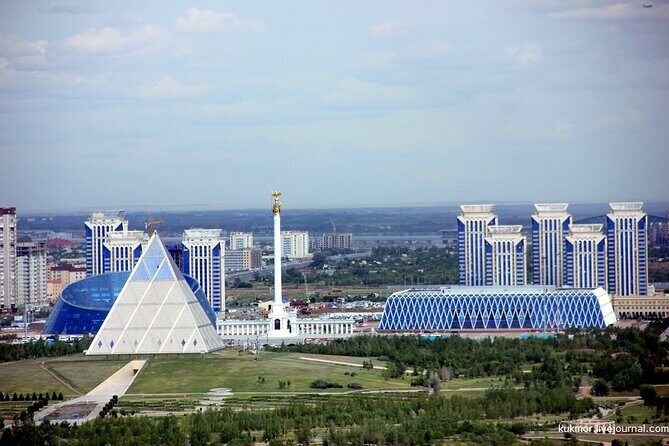
Independence Square is one of those places where symbolism is literally engineered. It’s dedicated to Kazakhstan’s independence and built around the idea of freedom and sovereignty. A big landmark is the Kazak Eli monument, 91 meters tall—linked to the year of independence, 1991.
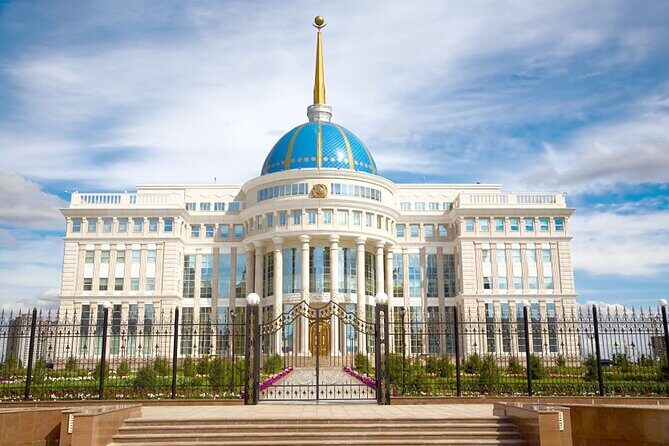
This stop is designed for a short visit (about 15 minutes) and is paired with the Palace of Independence, which is used for official government meetings, forums, and conferences. Even in a quick timeframe, the scale makes the point: independence isn’t treated as a small chapter. It’s treated as something ongoing.
What I like about this part is that it helps you read the city. Once you understand the monument math (height connected to 1991), a lot of other details in the capital start feeling less random.
Time check: because the tour is compact overall, you’ll likely get a focused look rather than long wandering. If you love spending time sitting with history, this tour may feel a bit brisk.
Peace and Reconciliation Pyramid: faith politics with a shape
Next comes the Palace of Peace and Reconciliation, often nicknamed the Pyramid because of its form. It was built before the first Congress of the Leaders of World Religions and Traditions held in 2006. That timing matters: it’s an example of how the capital invested in a setting for dialogue well before the major event.
This is the kind of stop that rewards a guide who can explain context. Without that, you’d just see a distinct building. With context, you see why the capital chose this kind of architecture for a global message.
If you’re interested in how Kazakhstan frames itself to the world, this is a strong mid-tour anchor.
National Museum iceberg and the long view from 2014
The National Museum of the Republic of Kazakhstan is the biggest museum in Central Asia and it opened in 2014. The building is shaped like an iceberg—an attention grabber from the outside, but also a neat way to think about what a museum is doing here: showing the visible while referencing what’s under the surface.
Inside, the museum covers history, culture, and traditions of the Kazakh nation from ancient to modern times. This matters for the tour’s overall goal of showing past, present, and future in the same breath.
A practical thought: museums can be huge and time-consuming, but this tour doesn’t sell a long museum day. You’re likely to get highlights rather than a full circuit. If you’re a museum power-user, consider using the tour to decide what section you want to return to on your own.
You can also read our reviews of more private tours in Nur Sultan




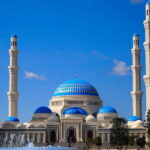
Hazret Sultan Mosque and the dome scale question
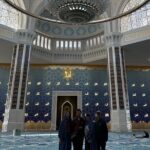
Hazret Sultan Mosque is tied directly to national leadership and spirituality. It was constructed at the initiative of the First President of Kazakhstan and dedicated to “Holy Sultan” Khoja Ahmed Yasawi, described here as a philosopher and religious enlightener.
The big draw is the scale—specifically, the mosque’s biggest dome in the world, according to the tour details. That’s the kind of claim you’ll want to see with your own eyes, because it changes how you feel standing in front of the structure. Even if you’re not religious, large-scale worship architecture communicates what a society invests in.
From a touring standpoint, mosques are also good for learning about modern Kazakhstan identity: tradition isn’t kept in a separate box. It’s part of the capital’s daily visual language.
Triumphal Arch: prosperity tied to 20 years of independence
Triumphal Arch is presented as a symbol of prosperity and an aspiration toward a bright future. It’s dedicated to the 20th anniversary of Kazakhstan’s independence, linking it to a specific milestone rather than a vague “forever onward” message.
I like this stop because it’s different from the museum and different from the religious architecture. It’s an in-between layer: civic emotion in stone.
If your travel style is about reading cities like open-air history books, this is the kind of landmark you’ll appreciate even if you only spend a short time here.
Museum of the Energy of the Future: alt power, 8 floors
The Museum of the Energy of the Future was established in 2017 and served as Kazakhstan’s pavilion at Astana EXPO 2017. Here’s what makes this stop click for a modern history tour: it treats the future like something you can walk through.
The museum has 8 levels, each focused on alternative energy types—kinetic, water, green, wind, and others as described in the tour notes. Whether or not you’re an engineering person, this structure encourages curiosity. You see energy not just as a topic, but as a system with multiple approaches.
What to consider: because you’re in a guided 3-hour route, you won’t likely have hours to test everything. If you’re the kind of person who loves interactive exhibits, you might want to keep your attention sharp and ask your guide what’s worth prioritizing first.
Astana Grand Mosque: modern and spacious, opened in 2022
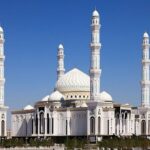
The tour finishes with Astana Grand Mosque, Kazakhstan’s new mosque opened in August 2022. It’s described as the most spacious mosque in Central Asia, with the largest dome and modern construction solutions.
This stop feels like a fitting “future” counterpart to earlier monuments. You’ve already seen independence messaging in public squares and technological ambition in an energy museum. Now you see a new religious space built with modern design choices.
Admission ticket is included here, which helps you avoid last-minute confusion. Since the stop time is about 20 minutes, you’ll likely get a focused look rather than a long break. If you want longer time for details and photos, plan to ask for it early.
Saksaul meal option: Kazakh cuisine on your schedule
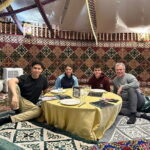
One of the most useful parts of this tour is the built-in option for a Kazakh meal called Saksaul. It’s scheduled as lunch or dinner time with delicious Kazakh dishes, snacks, and drinks, and the stop is listed as about 1 hour 30 minutes.
But it’s important: Saksaul is not included in the tour price. It’s available for extra payment if you want a full taste of local food culture.
I like that flexibility because it fits different travel styles. If you’ve got another plan for dinner, you can skip it and keep the tour strictly focused on history and architecture. If food is your travel “storytelling,” adding Saksaul can be a very good way to complete the day’s theme of past and present in daily life.
What to consider: you’ll need to plan extra time buffer for the meal itself since it’s a major chunk of the total experience block. If you’re trying to make tight evening reservations, talk through timing with your guide in advance.
Price and logistics: does $100 pay off?
At $100 per person for about 3 hours, you’re paying for a private route, private transportation, a guide in English or Russian, bottled water, and entrance fees. The value is strongest if you want context—someone to connect the dots between independence monuments, modern architecture, and the idea that Kazakhstan keeps turning its identity forward.
Group discounts are mentioned, so if you’re traveling with friends or family, the per-person value can improve.
A few logistics notes that matter in real life:
- Pickup is offered, which can save time in a city where distances can add up.
- It uses a mobile ticket, which usually means less paper and smoother entry.
- The experience requires good weather. If conditions are poor, you’ll be offered a different date or a full refund, so it’s smart to plan with a little flexibility.
If you’re the type who loves self-guided wandering with no structure, you might find the route too curated. But if you like your landmarks explained and sequenced, the price looks more reasonable quickly.
What it feels like with a strong guide (Didara is a standout example)
One of the best signals in the info you provided is how guides shape the experience. A review specifically praised a guide named Didara, describing her as a young Muslim woman and highlighting how she stayed engaged with discussion between stops about what happened to Kazakhstan and its people over centuries.
That kind of back-and-forth is where a private history tour becomes more than sightseeing. Bayterek stops being just a photo; independence monuments become a story about national identity; museums become a way to interpret change rather than store facts.
When you book, I’d treat your guide as part teacher, part conversation partner. Ask questions like how Kazakhstan frames its nomadic past alongside modern life. That aligns perfectly with the tour’s stated theme.
Who this private Nur-Sultan history tour is best for
This tour fits best if you want:
- A guided overview of major Nur-Sultan symbols without spending a full day planning
- A mix of independence history and futuristic-modern design
- Clear, timed stops with entrance included at key points
- The option to add Kazakh cuisine if you want the cultural side too
It’s also a good fit for first-time visitors who need to get their bearings fast while still seeing more than one type of attraction.
If you’re traveling with limited patience for “moving along” and you want hours in one museum, you might prefer a longer, slower tour. This one is about momentum.
Should you book this private history tour?
I’d book it if you want a compact route that covers the capital’s biggest identity markers—old symbolism like the Tree of Life legend at Bayterek, independence-focused architecture in public squares, and future-facing elements like the Energy of the Future museum and the newest Astana mosque.
I’d think twice if you’re looking for deep time in just one place. This is not a multi-day immersion plan. It’s a smart 3-hour sampler with context, and it works best when you treat each stop as a chapter rather than a full novel.
If you can only do one guided experience in Nur-Sultan and you care about understanding what you’re seeing, this private history tour is a solid choice.
FAQ
Where does the tour start?
The private tour starts at Bayterek Tower, the main symbol of Nur-Sultan.
How long is the tour?
It’s about 3 hours (approximately).
Is pickup included?
Pickup is offered.
What’s included in the price?
The price includes private transportation, bottled water, entrance fees, and a professional English/Russian-speaking guide.
Are admission tickets included for all stops?
Entrance fees are included overall, but the Independence Square stop notes that an admission ticket is not included. Bayterek Tower and Astana Grand Mosque are listed with admission ticket included.
Do I need to pay extra for food?
Yes. Kazakh cuisine at Saksaul (lunch or dinner) is not included in the cost and is available for extra payment.
Does the tour include Khan Shatyr entry?
Khan Shatyr time inside can be up to 30 minutes upon the traveler’s request.
Is this a private tour or a group tour?
It’s private. Only your group participates.
What if the weather is bad?
The experience requires good weather. If it’s canceled due to poor weather, you’ll be offered a different date or a full refund. Free cancellation is also available if you cancel at least 24 hours in advance.